
Shot Blasting vs. Floor Grinding: Which Method Does Your OKC Industrial Slab Really Need?
When you are planning a heavy-duty commercial or industrial flooring project within Oklahoma City or the surrounding 50-mile radius, it is incredibly easy to get caught up picking out the final look. Whether you want a high-performance epoxy coating, an ultra-durable urethane mortar, or a sleek polished look, your focus naturally drifts to the finished product. However, any experienced commercial general contractor or flooring installer will tell you that the long-term success of your floor relies completely on what happens before the top layer ever touches the ground. The secret lies entirely within professional concrete surface prep.
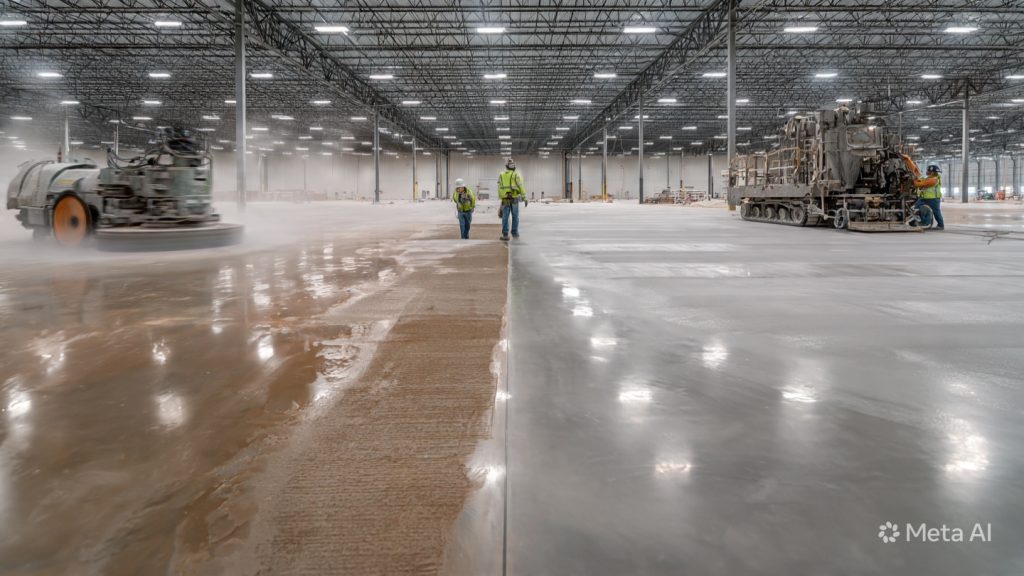
If a new flooring installation is laid down on an improperly prepared concrete substrate, the risk of early failure skyrockets. Without a proper surface profile, new coatings cannot grip onto the concrete, leading to devastating problems like bubbling, cracking, and widespread delamination. To achieve a bond-ready surface, industrial flooring projects utilize specialized equipment to mechanically clean and profile the slab. Two of the most common and effective techniques used today are shot blasting and floor grinding. While both methods are outstanding for transforming old concrete, they work in completely different ways and are used for entirely different scenarios. Understanding how these processes differ will save you time, keep your project on budget, and ensure your floor lasts for decades.
Understanding the Mechanics of Shot Blasting
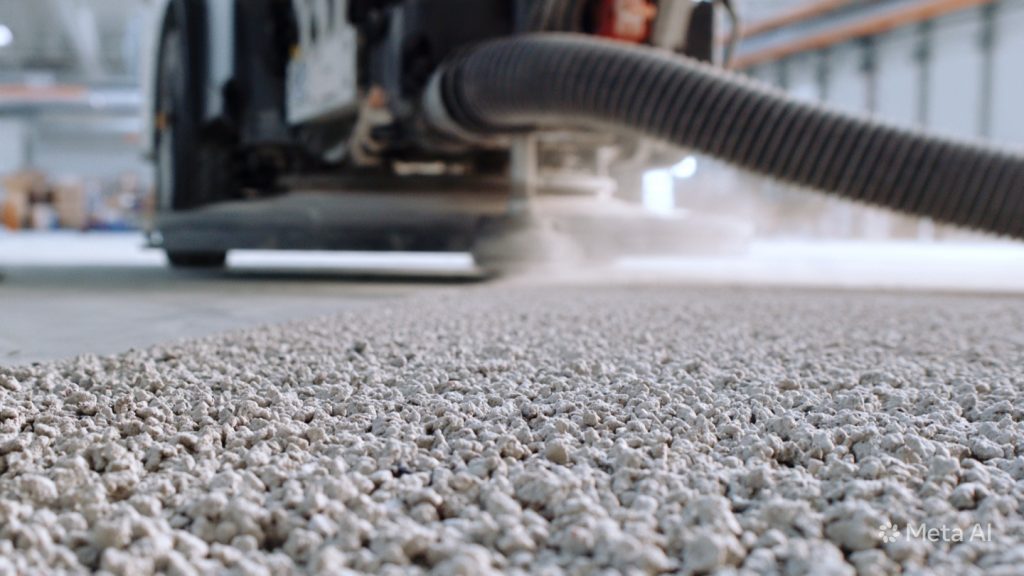
To make an educated decision for your facility, you first need to understand how a shot blasting service operates. This high-production technique relies on an aggressive, mechanical blasting process. A specialized walk-behind or ride-on machine fires thousands of tiny steel shot particles at the concrete surface at extremely high velocities. These steel spheres blast away weak top-layer concrete, deeply embedded grease, old dirt, and micro-contaminants.
What makes this process exceptionally efficient is its self-contained design. As the steel shot hits the floor, it breaks away structural impurities. The machine immediately vacuums the debris and steel shot back up into an onboard separation chamber. The pulverized concrete particles are funneled into a heavy-duty containment bin, while the undamaged steel shot is recycled back into the blasting stream to be used again. This continuous cycle makes concrete shot blasting a remarkably fast and completely dustless floor removal and profiling option for expansive industrial spaces.
The Major Benefits of Shot Blasting for Industrial Projects
The primary reason facility managers and engineers choose a shot blasting service is its unmatched speed and texturing capabilities. When you are dealing with massive warehouses or industrial production facilities, downtime represents lost revenue. A large-scale industrial shot blaster can easily prep and profile up to 30,000 square feet of flat concrete in a single day.
Additionally, shot blasting provides a deeper, highly textured mechanical grip known in the industry as a Concrete Surface Profile (CSP) rating of 3 to 6. This rough texture multiplies the total surface area of the concrete slab by opening up the deep pores of the concrete. This deep texturing is absolutely crucial for thick-mil resinous flooring systems, heavy self-leveling underlayments, and rugged urethane cements, as it gives the liquid material a deep structural grid to cling to for a lifetime bond.
When Shot Blasting Falls Short
While shot blasting is an industrial powerhouse, it is not ideal for every single layout. Because these machines are large, heavy, and travel in straight lines, they cannot fit into tight corners, small utility rooms, or right up against walls.
A professional floor preparation company will always pair a shot blaster with specialized hand-held edge tools to finish off a room. Furthermore, shot blasting is strictly a profiling and cleaning method; it follows the existing contour of your floor. If your warehouse floor is wavy, unlevel, or has major high spots, shot blasting will simply texture those imperfections rather than flatten them out.
Explaining the Precision of Floor Grinding
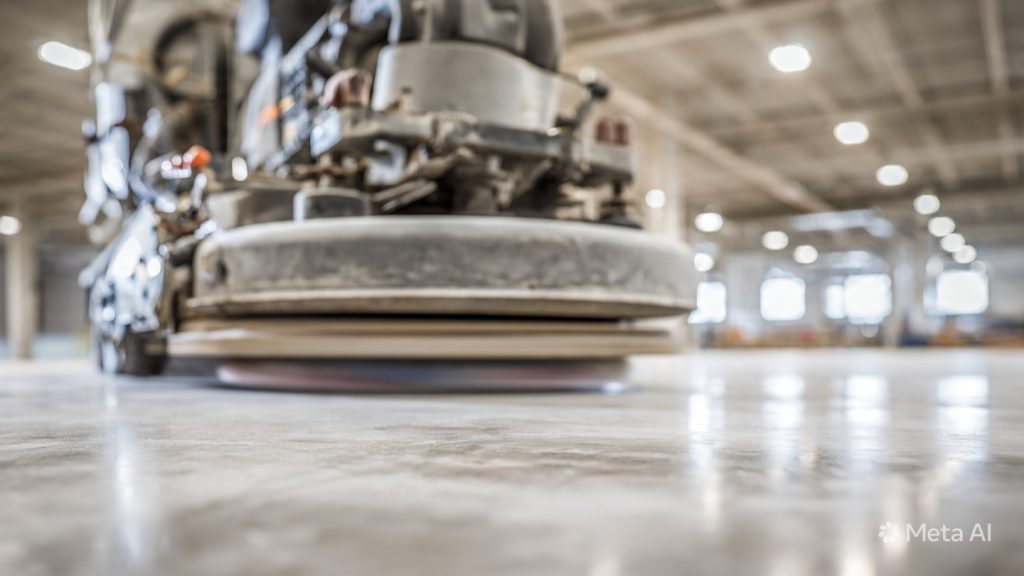
If shot blasting is the aggressive sledgehammer of concrete surface prep, diamond floor grinding is the precision chisel. Instead of firing impact projectiles at the floor, concrete floor grinding utilizes massive, spinning horizontal discs mounted underneath a planetary grinding machine. These discs are embedded with industrial-grade synthetic diamond segments that shave down the top layer of concrete through sustained friction.
Depending on the specific grit of the diamond segments used, floor grinding can be adapted to aggressively strip away materials or delicately polish concrete to a mirror finish. To maintain a safe and clean working environment, professional operators pair these grinders with powerful, OSHA-compliant HEPA dust collectors. This setup ensures a dustless grinding experience that protects the air quality inside active commercial properties, clinics, and offices.
The Advantages of Diamond Grinding Concrete
The standout advantage of utilizing a planetary grinder is its ability to flatten, smooth, and level an irregular slab. If your facility has rough transitions at structural joints or unlevel high spots caused by rain damage during the original concrete pour, diamond grinding concrete is the ultimate solution to create a completely flat, seamless surface.
Furthermore, grinding provides a much smoother, lower-profile texture, typically hitting a CSP rating of 1 to 4. This mild profile is ideal when you plan to install thin-mil coatings, clear sealers, or thin commercial floor coverings like Luxury Vinyl Tile (LVT) or commercial carpet. If you were to apply a thin sealer over a deeply textured shot-blasted floor, the high peaks of the concrete would stick right out through the thin coating, causing rapid wear spots and premature moisture intrusion. Grinding prevents this by keeping the substrate completely uniform.
The Limitations of Floor Grinding
The trade-off for the extreme precision of diamond floor grinding is time. Grinding is a noticeably slower, more labor-intensive process compared to high-production shot blasting. For massive industrial footprints, relying solely on grinding can extend project timelines and increase labor costs. Additionally, if the concrete slab is heavily contaminated with deeply embedded oils or chemicals, grinding can sometimes smear those contaminants across the surface rather than lifting them out completely, requiring specialized concrete cleaning agents to finish the job.
Crucial Preparation: Coating Removal and Floor Demo
Before you can choose whether to use shot blasting or floor grinding to profile your concrete, you have to deal with whatever is currently sitting on top of it. In many Oklahoma City commercial renovations, the slab is covered in decades of old flooring systems that require comprehensive floor demo.
Attempting to install a modern epoxy floor directly over old residues is a recipe for instant failure. Old adhesives will break down underneath new chemically active coatings, destroying the bond. A professional floor preparation company uses specialized walk-behind scrapers and heavy scarifying concrete machines to execute high-efficiency tile removal, carpet demo, and complete floor covering removal.
Eliminating Stubborn Adhesives and Resins
Different materials require highly tailored removal strategies to avoid damaging the underlying structural concrete slab:
- Epoxy Removal: Old, peeling industrial epoxy floor removal requires aggressive scarification or coarse-grit diamond grinding to fracture the chemical bond and shave the stubborn resin away from the slab.
- Thinset Removal: Removing old ceramic tile leaves behind a rock-hard grid of mortar. A specialized thinset grinding service utilizes heavy-duty diamond segments to quickly pulverize this mortar, returning the floor to a clean, flat plane.
- Mastic Removal & Glue Scraping: Old vinyl composite tile (VCT) installations often rely on thick black mastic or pressure-sensitive glues. Simply grinding this material with standard discs will generate high friction heat, melting the glue and gumming up the diamond segments. Professionals utilize specialized scraping attachments or tile mastic removal discs designed to shear the glue away cleanly without smearing.
Addressing Hidden Threats: Moisture Mitigation and Leveling
Once the old floor demo is finished and the concrete is bare, two critical steps remain before applying your final finish: evaluating concrete moisture levels and ensuring structural levelness. Ignoring these factors can completely ruin a brand-new commercial floor.
The Critical Role of Concrete Moisture Testing
Even if an indoor concrete floor looks completely dry to the naked eye, concrete acts like a dense sponge. It constantly absorbs and releases microscopic water vapor from the ground below. If you seal a slab with an impermeable layer like solid epoxy without running a proper concrete moisture testing sequence, that trapped vapor pressure will build up over time.
This vapor pressure triggers an osmotic reaction, forcing its way upward to create large bubbles, blisters, and cracks in your beautiful new floor covering. To prevent this catastrophe, a professional contractor installs an advanced concrete moisture barrier. This specialized moisture mitigation system chemically seals the inner pores of the slab, locking moisture down deep where it can never harm your top layers.
Perfecting the Flatness with Concrete Floor Leveling
Industrial environments rely heavily on perfectly flat floors for the safe operation of forklifts, heavy machinery, and precision automated systems. If your slab has severe dips, low spots, or structural waves, mechanical profiling alone will not resolve the issue.
In these scenarios, a professional crew executes a comprehensive concrete floor leveling procedure. After opening up the concrete pores with mild grinding to ensure excellent adhesion testing parameters, a premium fluid self-leveling underlayment is poured over the floor. This material naturally flows into low spots, self-correcting any structural variations to establish a perfectly flat, level, and strong foundation for the final flooring system.
Frequently Asked Questions About Concrete Prep
Why can't I just use muriatic acid to etch my concrete floor for an epoxy installation?
While acid etching is frequently promoted in DIY home improvement kits for thin garage sealers, it is highly discouraged for commercial or industrial projects. Acid etching only provides a very mild, superficial profile (CSP 1), which is entirely inadequate for high-performance industrial coatings.
Furthermore, acid etching introduces massive amounts of water deep into your concrete slab, heavily increasing the risk of moisture-related delamination later on. The chemical process also releases hazardous fumes into enclosed commercial facilities and requires meticulous neutralizing washes that can severely damage surrounding grass, landscaping, and outdoor asphalt parking lots.
How long does the concrete floor grinding or shot blasting process usually take?
The overall project timeline depends heavily on the size of the facility, the layout of the rooms, and whether there is an existing coating that requires industrial floor prep or tile removal. For large, open warehouse floors using high-production shot blasting, a professional crew can easily prep up to 30,000 square feet per day. For tighter commercial spaces requiring intensive diamond floor grinding, mastic removal, or specialized thinset grinding service work, production rates generally average between 3,000 and 6,000 square feet per shift.
What is the difference between a CSP 2 and a CSP 5 rating?
The Concrete Surface Profile (CSP) is a standardized scale developed by the International Concrete Repair Institute (ICRI) to measure the roughness of a prepared concrete substrate, ranging from 1 (smoothest) to 9 (roughest). A CSP 2 rating is a light texture achieved through standard floor grinding, perfectly optimized for thin-mil coatings and sealers. A CSP 5 rating represents a deeply textured, rough surface profile typically achieved through medium-heavy shot blasting or aggressive concrete scarification service methods, which is strictly required to hold heavy-build urethane mortars or industrial self-leveling underlayments.
Frequently Asked Questions About Our Business
What areas do you serve around Oklahoma City?
OKC Surface Prep proudly serves commercial, industrial, and residential clients throughout the entire Oklahoma City metropolitan area and all communities located within a 50-mile operating radius. Our standard commercial floor demo and preparation service range extends to Norman, Edmond, Moore, Midwest City, Del City, Yukon, Mustang, El Reno, Shawnee, and Guthrie. If you have a substantial industrial project located just outside this regional zone, our production team regularly travels across Oklahoma to accommodate large-scale facilities.
Are your concrete preparation processes safe for occupied commercial buildings?
Yes, safety and strict environmental compliance are foundational to our daily operations. We recognize that many commercial businesses, retail stores, and manufacturing plants need to maintain active operations during a renovation. To minimize disruption, we utilize advanced, industrial HEPA-filtered vacuum extraction systems coupled directly to our planetary grinders, shot blasters, and scarifiers. This dustless grinding engineering traps 99.97% of airborne micro-particles right at the source, completely preserving the indoor air quality of your facility and meeting all strict OSHA silica dust regulations.
How do I request a technical estimate for my upcoming facility upgrade?
Getting a comprehensive, detailed technical estimate for your project is simple. You can connect with our local Oklahoma City office directly by calling 405-817-6649. Our technical specialists will review your project parameters, discuss the technical specifications required by your chosen flooring manufacturer, and schedule an on-site evaluation if necessary to inspect your slab’s current condition, hardness, and moisture levels.
Engineering Flawless Foundations for OKC Businesses
No matter how premium or expensive your choice of commercial or industrial flooring is, it will fail if it is applied to an unready, contaminated, or unlevel substrate. Investing in professional concrete surface prep is the absolute single best insurance policy you can purchase to guarantee the longevity, durability, and flawless performance of your floor. By tailoring our advanced equipment to your unique project demands, we eliminate installation risks and deliver a flawless, high-performance substrate every time.
About OKC Surface Prep
OKC Surface Prep is Oklahoma City’s premier independent contractor specializing in commercial, industrial, and high-performance concrete substrate preparation. Headquartered at 3801 NW 63rd St, Suite 240A4, Oklahoma City, OK 73116, our elite field crew brings decades of combined hands-on mastery in structural concrete forensics, mechanical floor demo, and advanced surface profiling.
We partner directly with leading flooring contractors, commercial general contractors, epoxy installers, and facility managers who refuse to compromise on structural integrity.
Equipped with a fleet of heavy-duty planetary diamond grinders, self-contained shot blasting machines, high-output scarifiers, and strict OSHA-compliant HEPA extraction equipment, OKC Surface Prep handles projects of any scale with extreme precision. We operate strictly under the rigorous standards set by the International Concrete Repair Institute (ICRI) and federal silica dust guidelines, ensuring that every floor system we prepare is fully compliant, structurally sound, and perfectly engineered for a lifetime bond.