

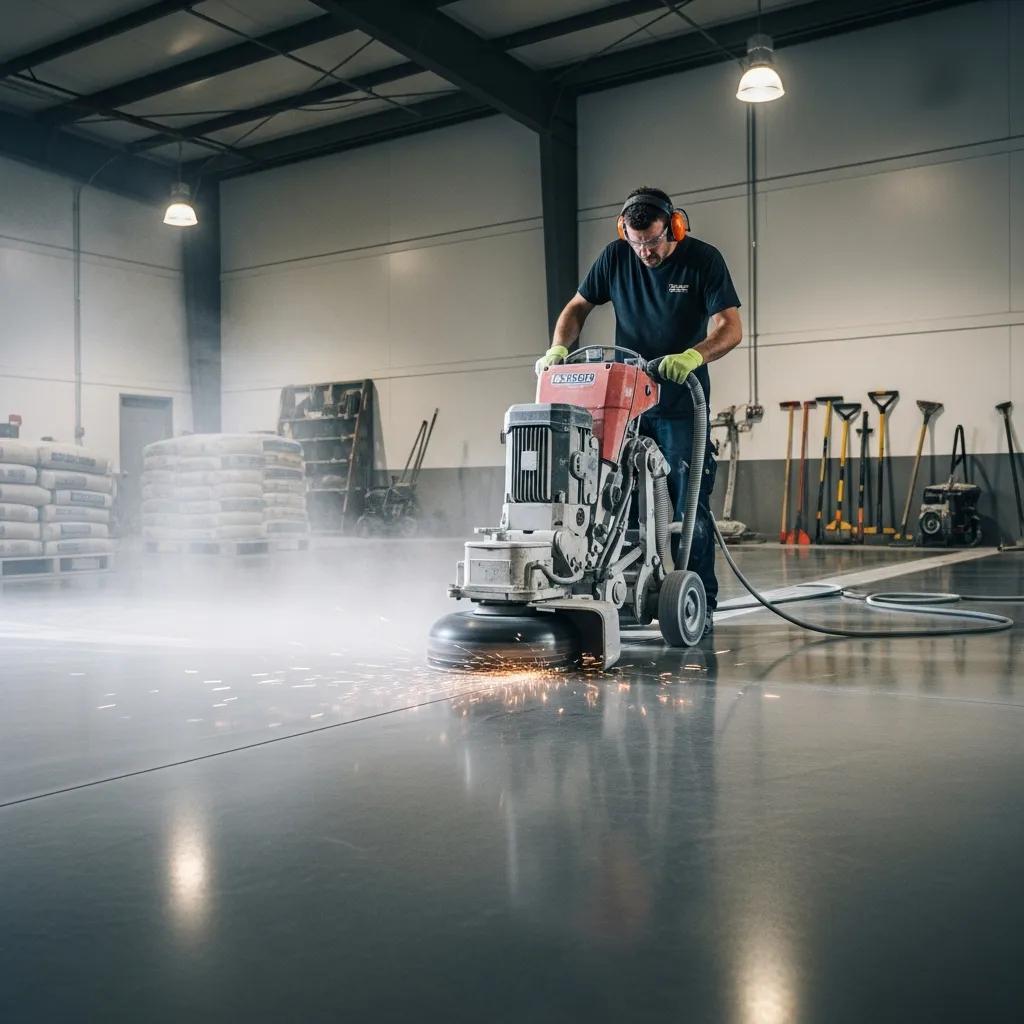
Concrete Floor Grinding Services for Polished Concrete Floors: Expert Surface Preparation in Oklahoma City
Concrete grinding is a controlled mechanical process used to produce polished concrete floors that balance appearance and long-term performance. This article summarizes core grinding methods, the benefits of correct surface preparation, and practical controls contractors use to achieve consistent finishes and extended floor life.
Adherence to established guidelines and documented best practices is essential to achieve reliable, repeatable results in concrete surface preparation.
Concrete Surface Preparation Guidelines & Best Practices
These guidelines provide design and construction recommendations for the surface preparation of concrete intended for repair and overlay. The paper summarises current knowledge, documented best practices and research results related to preparing concrete prior to the application of repair or overlay materials.
Guidelines for concrete surface preparation: 10 years research and experience, L Courard, 2018
Expert Surface Preparation Techniques
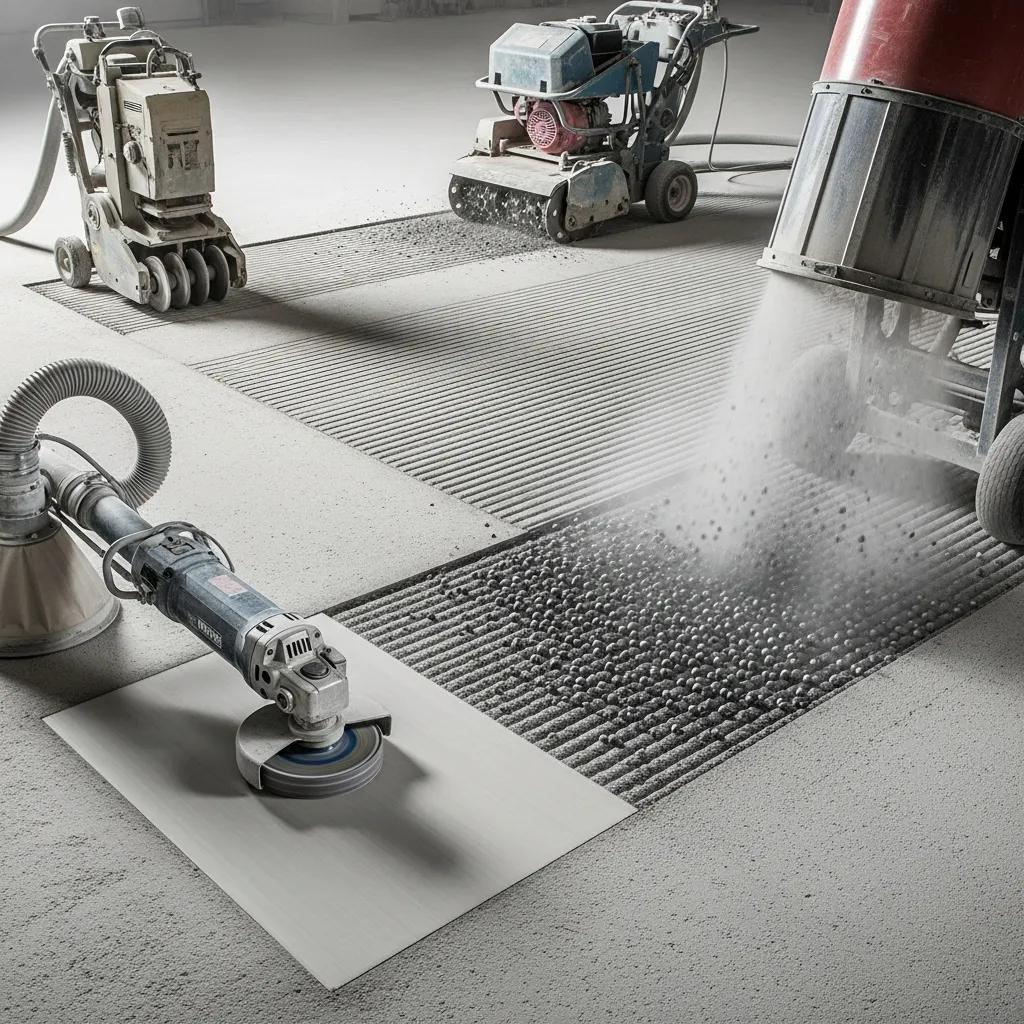
Effective preparation is the foundation of a polished concrete floor that meets appearance and durability targets. Contractors select mechanical methods based on substrate condition, target profile, and the final finish.
- Diamond Grinding: Abrades the surface with diamond tooling to remove defects and create a smooth base for polishing.
- Shot Blasting: Propels steel shot to clean and profile the slab quickly, useful for removing coatings and contaminants.
- Scarifying: Uses cutting tools to remove thicker surface layers where heavier remediation or profiling is required.
Each method supports specific performance outcomes when applied with appropriate controls and tooling.
Benefits of Proper Preparation
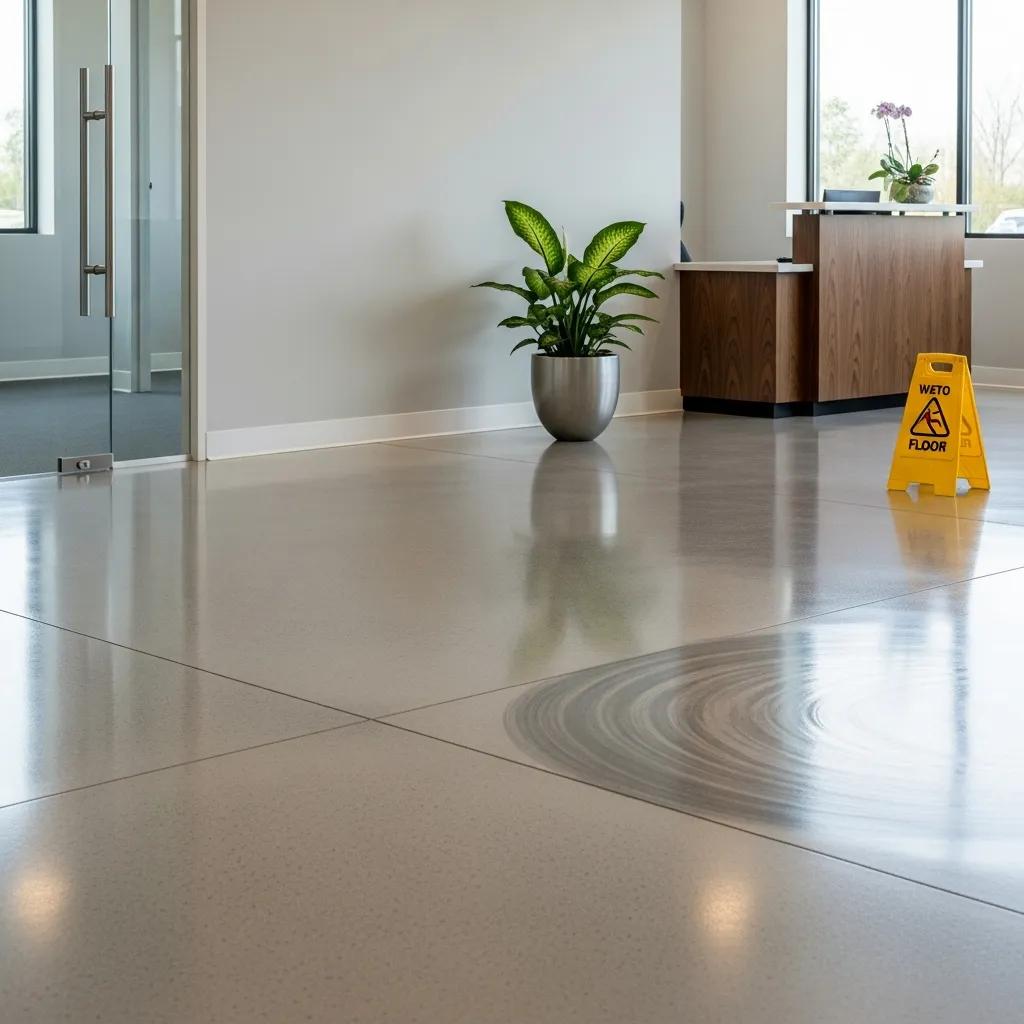
Correct surface preparation produces measurable benefits that reduce lifecycle costs and improve floor performance.
- Enhanced Adhesion: Prepared surfaces allow sealers and coatings to bond more reliably.
- Increased Durability: Removing contaminants and weak material reduces early failures and wear.
- Safety Compliance: Proper profiling improves traction where required for slip resistance.
OKC Surface Prep offers professional preparation services to ensure substrates are ready for polishing and coating systems.
Key Considerations for High-Quality Polished Finishes
Teams must control a few critical variables: surface profile, moisture condition, and dust management. Defining the required profile and verifying substrate moisture are early steps; dust control is maintained throughout grinding to protect health and finish quality.
- Surface Profile: Match the texture to the finish or coating system specified.
- Moisture Control: Confirm dryness and address hydrostatic issues before sealing or polishing.
- Dust Control: Use containment and high-efficiency extraction to limit airborne and settling dust.
What is Concrete Grinding and Why is it Essential for Polished Concrete Floors?
Concrete grinding levels and refines the slab using specialized equipment. It removes surface defects, coatings, and contaminants, producing a uniform substrate that accepts sealers and polishes consistently and extends service life.
How Does Concrete Grinding Prepare Surfaces for Polishing?
The workflow starts with a condition assessment to identify cracks, contaminants, and coatings. Operators remove irregularities with the right tooling, open the concrete matrix for sealer absorption, then progressively hone the surface to the specified smoothness and profile for polishing.
What Are the Key Benefits of Proper Concrete Surface Preparation?
Prepared surfaces improve adhesion, reduce the risk of delamination or peeling, and help achieve longer service life for the finished floor. Investing time and budget in preparation reduces remediation and lifecycle costs.
- Improved Adhesion: Better bonding of coatings and sealers.
- Reduced Risk of Failures: Lowers likelihood of delamination and peeling.
- Longer Service Life: Increased resistance to wear and maintenance demands.
These outcomes support predictable performance and lower total cost of ownership for polished concrete systems.
Which Equipment and Techniques Are Used in Industrial Concrete Surface Preparation?
Industrial preparation uses purpose-built machines and tooling matched to the scope and substrate condition.
- Diamond Grinders: For grinding and initial polishing passes.
- Shot Blasters: For rapid cleaning and profiling of coated slabs.
- Scarifiers: For deep removal and heavy-duty profiling.
Select equipment to meet the required profile and project specifications efficiently.
What Are Diamond Grinding Tools and Their Role in Surface Profiling?
Diamond tools use industrial-grade segments to abrade concrete predictably. They remove defects and produce controlled textures that meet bonding and finish requirements for sealers and polish systems.
How Do Advanced Grinding Methods Improve Surface Finish Quality?
Advanced machines—planetary grinders, variable-speed drives, and engineered tooling—allow finer control of cutting action and pressure. Combined with containment and vacuum systems, they yield more uniform finishes, lower dust, and reduce risk of substrate damage.
How Does OKC Surface Prep Ensure Compliance and Quality in Commercial Concrete Floor Grinding?
OKC Surface Prep follows industry best practices, uses modern dust-controlled equipment, and documents procedures and quality checks to meet client and regulatory requirements while producing consistent, auditable results.
What Industry Standards Guide Concrete Grinding and Polishing Processes?
Standards and regulations address safety, accessibility, and documentation. Contractors should consider applicable accessibility rules, safety protocols, and technical reporting to record process parameters and outcomes.
- ADA Compliance: Verify surface characteristics where accessibility is required.
- Technical Reporting: Document processes and measured results for transparency.
Following standards helps contractors deliver predictable, verifiable outcomes that satisfy clients and regulators.
How Does Local Expertise Enhance Project Outcomes in Oklahoma City?
Local contractors understand regional environmental conditions, common substrate types, and local building codes. This knowledge improves planning, specification accuracy, and proactive mitigation of site-specific risks to deliver projects efficiently.
What Are the Typical Project Timelines and Maintenance Practices for Polished Concrete Floors?
Timelines vary with area size and slab condition; small areas may take days while larger or remedial projects take weeks. Recommended maintenance is routine cleaning with pH-neutral products and periodic resealing based on traffic to preserve appearance and performance.
Frequently Asked Questions
What is the difference between diamond grinding and shot blasting?
Diamond grinding refines and smooths the surface for polishing; shot blasting cleans and profiles quickly to remove coatings. Choice depends on the end result required.
How often should polished concrete floors be maintained?
Clean weekly with a pH-neutral cleaner; reseal or refresh finishes as traffic and wear dictate, commonly within 6–12 months for higher-traffic areas.
Can I perform concrete grinding myself, or should I hire a professional?
Specialized equipment and skill are required to control profile and dust. Hiring experienced professionals reduces risk and ensures compliance with standards.
What factors influence the cost of concrete grinding services?
Key cost drivers are area size, slab condition, required profile, equipment, and any repairs or specialized finishes. Request multiple quotes to compare scopes.
Are there any environmental concerns associated with concrete grinding?
Major concerns are dust and waste. Use dust-extraction systems, appropriate wet methods when suitable, and compliant waste disposal to reduce impact.
What should I look for when choosing a concrete grinding contractor?
Look for documented experience, project references, modern equipment, safety practices, and adherence to industry standards and reporting.
How can I enhance the longevity of my polished concrete floors?
Maintain scheduled cleaning, reseal as needed, use protective matting at entries, and repair damage promptly to limit wear.
Conclusion
Professional concrete grinding and surface preparation ensure polished floors meet aesthetic and performance requirements. Appropriate methods and modern equipment improve adhesion, reduce maintenance, and extend service life. Contact OKC Surface Prep to review project requirements and specification-compliant surface preparation solutions.